Services
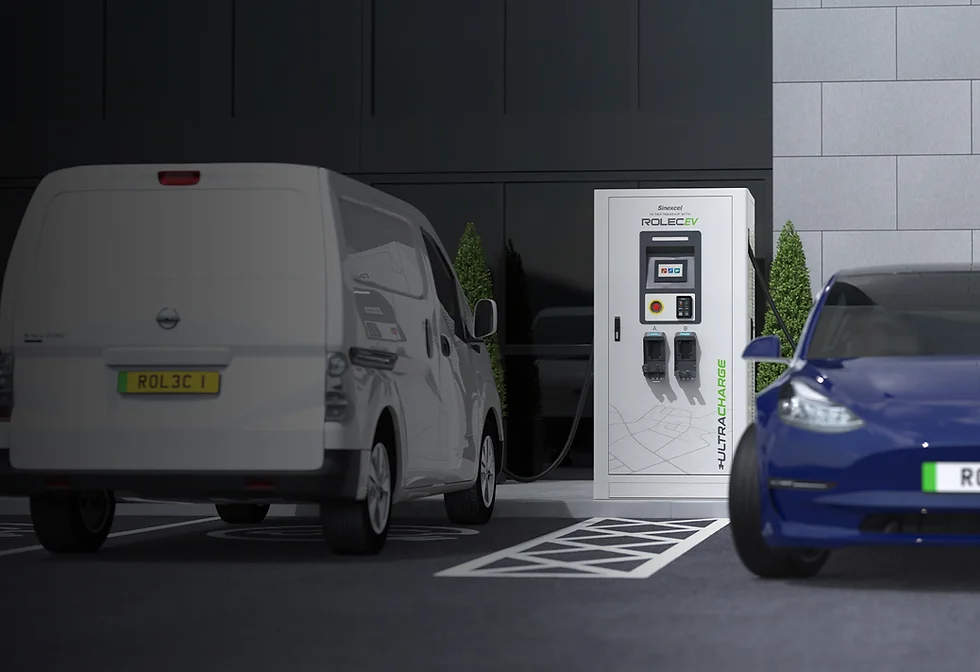
Rapid DC charging, from 40kW to 400kW
For sites where the time a vehicle spends plugged in is the thing that matters.
What it involves
Right in fewer cases than people expect
Rapid charging is the right answer in a narrower set of cases than people expect, and the wrong answer in a lot of them. It earns its cost where a vehicle has to be back out quickly, or where charging is the reason someone stopped at all.
Where that is genuinely the case, we install Rolec UltraCharge units from 40kW up to 400kW, and we are honest with sites where AC charging would do the same job for a fraction of the connection cost.
On this page
When rapid is worth it
01
When rapid is worth it
Rapid charging pays where dwell time is short and the vehicle cannot wait. A delivery van back at the depot for forty minutes between rounds, a taxi on a rank, a car park where people stop for half an hour, a forecourt where charging is the product.
It does not pay where vehicles sit for hours anyway. A car parked from nine to five gains nothing from 150kW that it would not gain from 7kW, and the connection cost is an order of magnitude apart.
02
The connection is the project
With rapid charging the units are rarely the hard part. The supply is. A single 150kW unit is a substantial load, and a bank of them is a new connection rather than a spare breaker.
So the first work is establishing what the site can get and what it would cost. We check the existing capacity, apply to the network operator where a new or upgraded connection is needed, and track that application through, because the lead time on it usually sets the programme for the whole job.
- What the existing supply can carry, measured on site
- The DNO application where a new or upgraded connection is needed
- Realistic lead times, so the programme is built around the connection
- Whether a modular unit lets you start smaller and add power later
03
Modular power, so you are not buying for 2030 now
The larger UltraCharge units are modular. A site can start at 120kW and add power in steps as demand grows, rather than paying for capacity that sits idle for three years or installing something that is undersized by the time the fleet turns over.
04
Accessibility and public sites
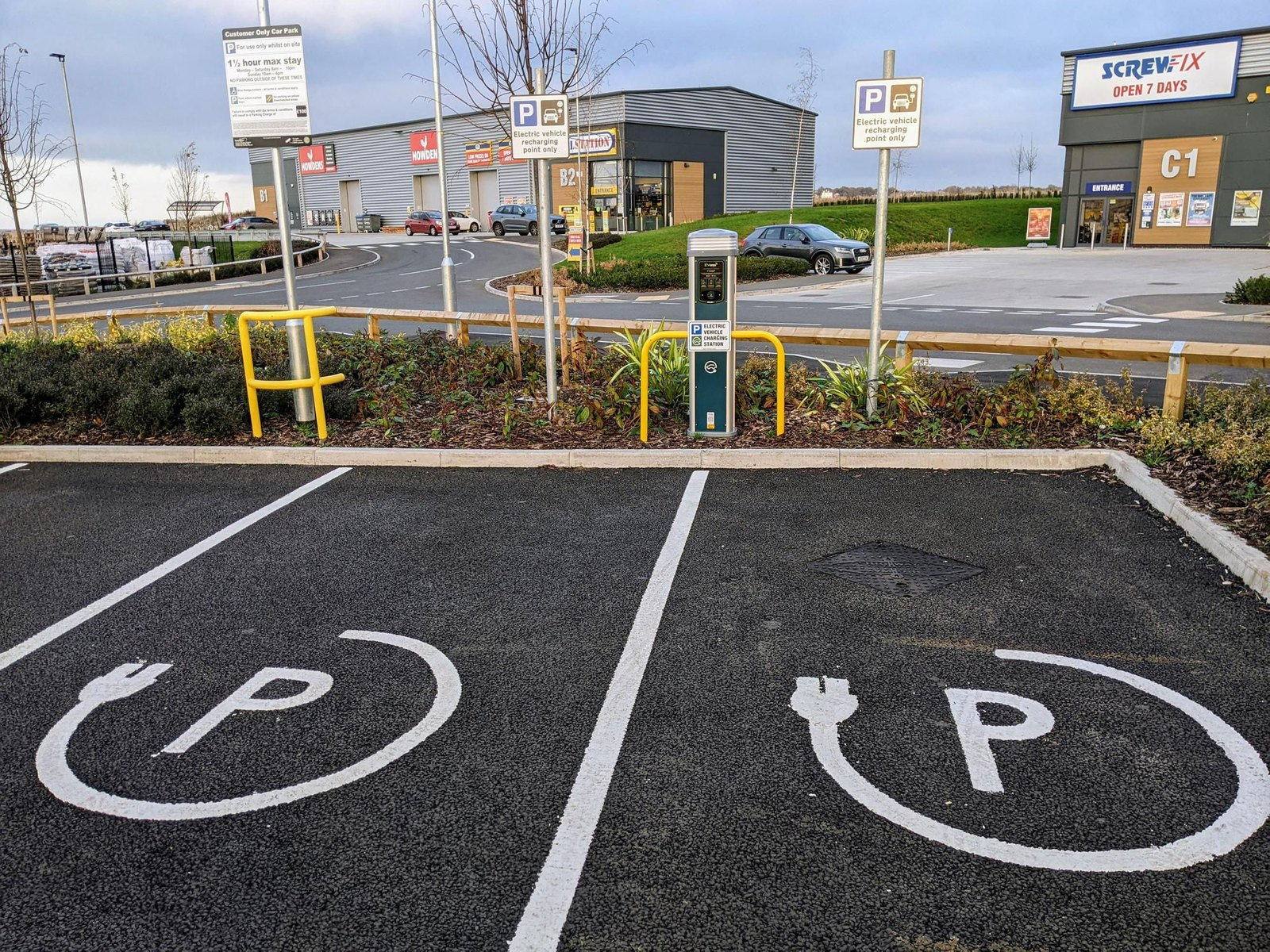
Charging open to the public brings requirements that a private yard does not. The UltraCharge range meets PAS 1899, the accessible charging standard, and on public sites we design the bay layout, kerbs and clearances around it rather than treating it as an afterthought.
The units we fit
Equipment that suits this kind of site
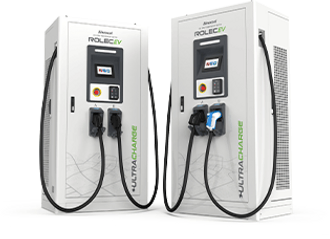
01 · Rapid DC
Rolec UltraCharge
40kW to 400kW
Rapid DC charging for depots, forecourts and public sites where the time a vehicle spends plugged in is the thing that matters.
View unit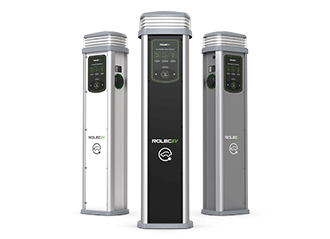
02 · Commercial pedestal
Rolec Quantum
7.4kW or 22kW
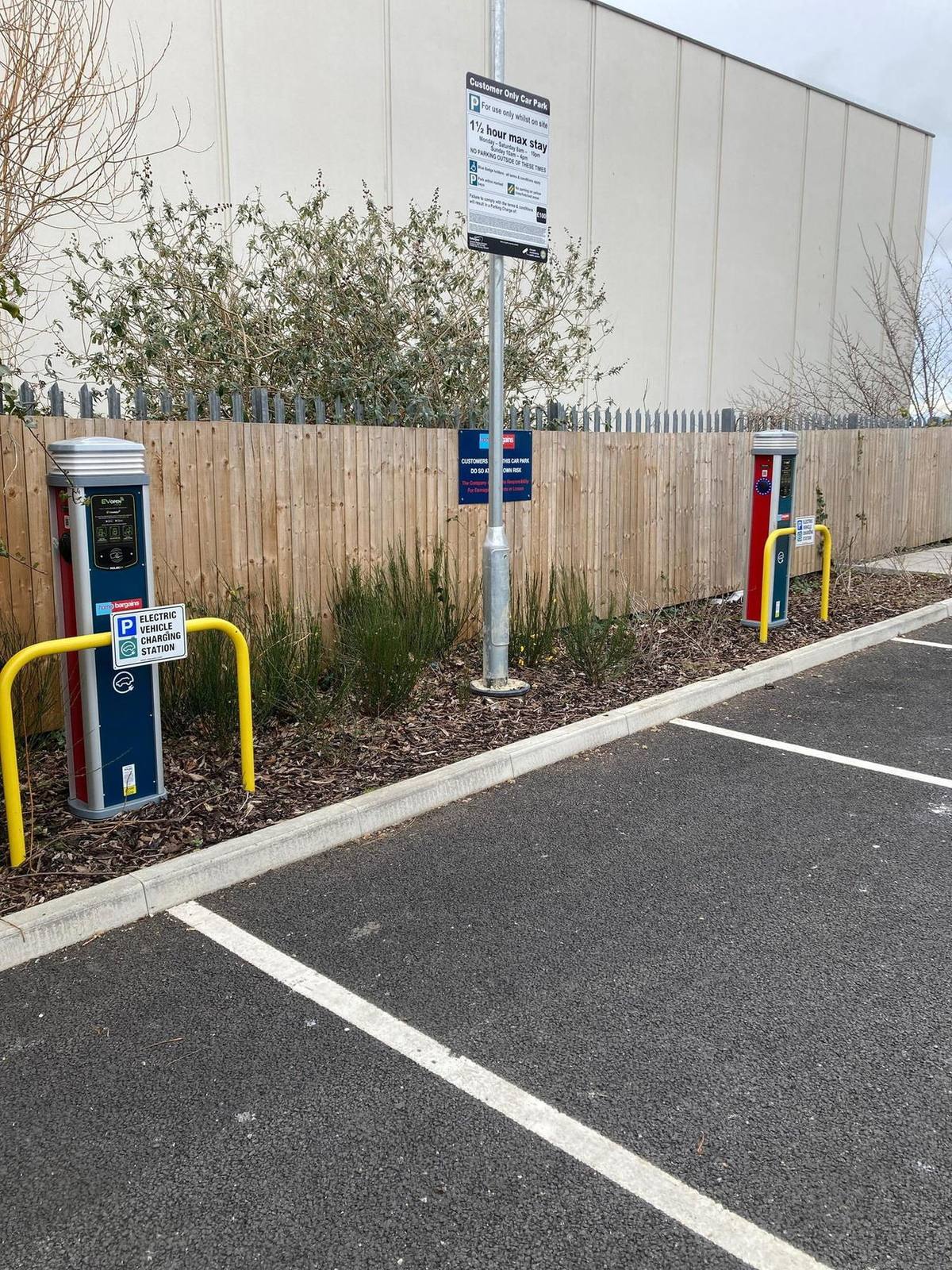
A twin socket pedestal with payment and lighting built in. The usual answer for a public or paid car park.
View unit
Questions
What people ask us about this
Only if vehicles cannot wait. If they sit for hours anyway, AC charging does the same job for a fraction of the connection cost. Rapid earns its money where dwell time is short or where charging is the reason people stopped.
The supply, not the units. A single large rapid charger is a substantial load and a bank of them usually needs a new or upgraded connection. The lead time on that application normally sets the programme for the whole job.
Yes. The larger UltraCharge units are modular, so a site can start lower and add power in steps as demand grows rather than paying up front for capacity that sits idle.
That depends on the vehicle as much as the charger. Most cars accept their peak rate only for part of the session, and a vehicle limited to 50kW gains nothing from a 150kW unit. We size the units around what your vehicles can actually take.
Yes. The UltraCharge range meets PAS 1899, the accessible charging standard, and takes contactless payment. On public sites we design the bay layout and clearances around accessibility from the start.
Also from us
Other things we install
Tell us about the site
Send over the address and roughly what you are after. We will tell you what it involves and what it costs, with no obligation.