Services
Solar PV Installer
Solar PV installer, with battery storage that feeds the vehicles
Solar and battery storage fitted alongside the charging, as one energy setup.
What it involves
Charge from your own roof, not only the grid
Charging vehicles from the grid is fine. Charging them from your own roof is better, and on a commercial building with a large flat roof and vehicles parked under it all day, the two fit together unusually well.
We are a GivEnergy certified installer and we design solar, storage and charging as one system rather than three separate jobs that happen to share a building.
On this page
Why it works better with charging than without
01
Why it works better with charging than without
Solar generates most in the middle of the day. A commercial car park is fullest in the middle of the day. That coincidence is worth real money, because the generation goes straight into the vehicles at the point of use rather than being exported for a fraction of what it is worth.
Battery storage closes the gap on the days it does not line up, holding what the roof produced until the vehicles need it.
02
Sizing the battery around what you actually use
Battery storage is expensive per kWh, so the size has to come from the site's own consumption pattern rather than the roof area. We look at your actual half hourly data where it exists and size the storage around the shape of your demand.
- Storage sized from your real consumption, not from the array size
- Backup supply during a power cut, which on some sites is the main reason to buy
- Export with the right grid arrangement where generation genuinely exceeds use
- One system, so the solar, the storage and the chargers cooperate rather than compete
03
Keeping the lights on
For some sites the payback conversation is secondary and the real driver is not going dark. Battery storage holds the essential circuits up through a power cut, and on premises where a few hours without power costs more than the battery, that is the whole business case.
04
How it sits with the charging
A charger that can see the solar generation and the battery state can behave far more intelligently than one that cannot. Charging can be biased towards the hours when the roof is producing, held back when the site is drawing hard, and topped up from the battery when the grid is expensive. That coordination is the reason to have one installer design all three.
The units we fit
Equipment that suits this kind of site
01 · Commercial pedestal
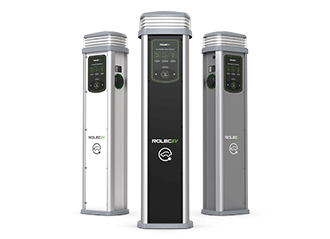
Rolec Quantum
7.4kW or 22kW
A twin socket pedestal with payment and lighting built in. The usual answer for a public or paid car park.
View unit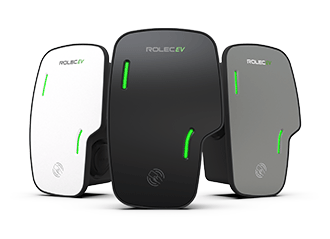
02 · Smart home unit
Rolec Zura
7.4kW single phase, or 22kW three phase
The smart home charger, app controlled, in a case that suits most houses and a fair few small car parks.
View unit
Questions
What people ask us about this
Better than it does alone, on a commercial site. Solar generates most in the middle of the day and a workplace car park is fullest in the middle of the day, so the generation goes straight into the vehicles rather than being exported for a fraction of its value.
That comes from your consumption pattern, not from the roof area. We work from your actual half hourly data where it exists and size the storage around the shape of your demand, because storage is expensive per kWh and an oversized battery never pays back.
Battery storage can hold essential circuits up through a power cut. On premises where a few hours without power costs more than the battery, that is often the main reason to install it rather than the energy saving.
With the right grid arrangement, yes. On a site with vehicles to charge it is usually worth more used on site than exported, so we would normally size the system to be consumed rather than sold.
We are a GivEnergy certified installer, and the electrical work is carried out under the same NAPIT registration and Registered Competent Person status as the charging installations.
Also from us
Other things we install
Tell us about the site
Send over the address and roughly what you are after. We will tell you what it involves and what it costs, with no obligation.